
Training
We believe that the right training can transform responses and change outcomes.
The accredited continuous professional development interagency training ‘Reflecting on and Responding to Domestic Abuse and Coercive Control’ was developed by Haven Horizons and is delivered through the Technological University of Shannon (TUS).
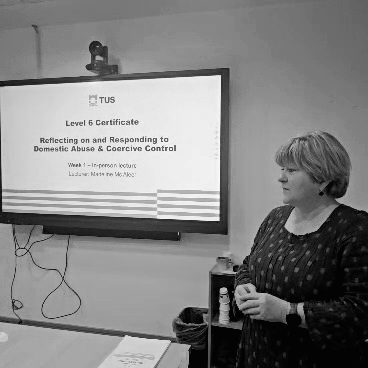
Course Overview
The course will provide students with:
- An understanding of theories, concepts, myths and dynamics in relation to domestic abuse and coercive control.
- The knowledge and skills to respond appropriately to victims, understand barriers to seeking help, identify appropriate multi-disciplinary collaboration and the importance of self-care.
- Opportunities to reflect on their understanding of national and international intervention and prevention strategies as the course progresses.
The course will use real life case studies to examine the barriers to help-seeking and disclosure, victim engagement, victim safety, risk assessment, perpetrator accountability, effective interagency practice and prevention strategies.
Who is the course suitable for?
The course will be of interest to personnel in frontline services that deal with domestic abuse, and anyone whose work or volunteering will bring them into contact with victims or perpetrators of domestic abuse and coercive control.
Please note that this course is not suitable for people currently:
- experiencing domestic, sexual, gender-based abuse
- attending support services for victims or perpetrators of domestic, sexual, gender-based abuse
- involved in court proceedings regarding domestic, sexual, gender-based abuse
If you are interested in an online programme for victims of domestic abuse SiSi (Survivors Informing Services and Institutions) run the Freedom Programme
Support groups and helplines for victims of domestic abuse:
Women’s Aid (female victims) – National helpline: 1800 341 900
Rape Crisis – National Helpline: 1800 77 8888
Male Advice Line (male victims) National Helpline: 1800 816 588
LGBT Ireland – National Helpline: 1800 929 539